Tristan’s Bio & Philosophy
I could be watching a live cricket match right now, in some remote location of the world.
For over a decade, that’s exactly what I did as a sports journalist and it was a lot of fun. What’s not to like about having the best seat in the house at some of the biggest games?
Yet there came a time when I had questions, and they were less about the careers of wealthy, famous sportspeople and more about what makes a truly good life, and whether ways existed for humanity to shift from its destructive trajectory and create a more beautiful world.
Taking a Permaculture Design Certificate provided answers towards how it can. So I took them and transformed my garden into an urban permaculture demonstration site.
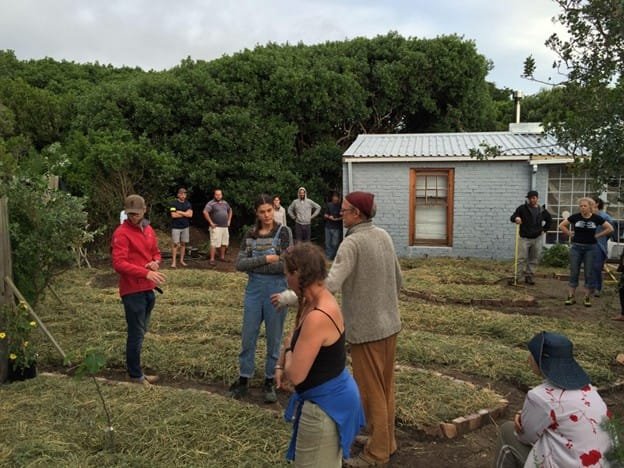
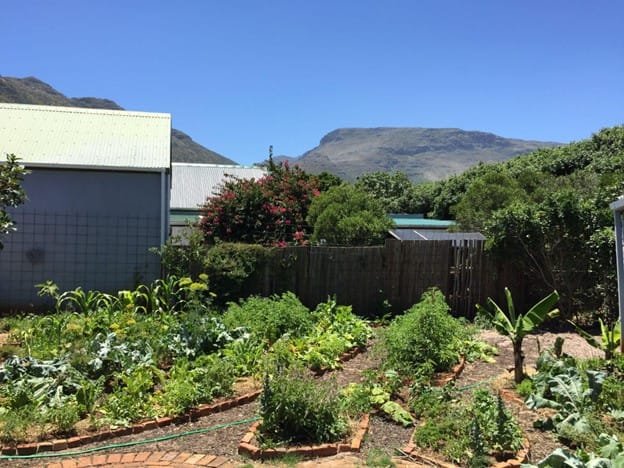
That felt great, and it immersed me in the field of regenerative design thinking. I started to understand what it meant to build systems that work with the natural order of things, empowering them to get better, year after year.
Then, as I started to wonder what kind of life might support the way that I wanted to parent my two boys, and all avenues pointed towards community living, I came across Values-Based Decision-Making (VBDM). Here was regenerative design thinking applied to the social sphere, be it my own life, my family’s, a land project, a business or an intentional community.
So as I co-founded a community with a group of other families (more on that story here), I applied VBDM and found that it guided us away from the goal we thought we needed, and landed us in a place that was a far better fit for our values.
Instead of trying to create a whole new ecovillage near Cape Town, we moved up the Garden Route and ‘retrofitted’ an existing one. Doing so allowed the group to extend from four families at the start, to nine, without costing us huge amounts of potential quality time with our kids. We all still live here at Kuthumba Ecovillage.
The process made me realise that my passion lay more in life design than land design, and so I reached out to the ‘inventor’ of VBDM, Javan Bernakevitch. He agreed to teach me the full and proper use of the tool, and I ended up doing a three-year apprenticeship under him. We now run VBDM courses together online.
At the same time, I served as a trustee/director for Kuthumba and sharpened my understanding of which systems and practices work when it comes to cooperative governance, and which ones don’t. I’ve had some successes, and learnt a lot from the failures. Along the way I’ve taken courses with the Foundation for Intentional Communities to receive training from Laird Schaub and Diana Leafe Christian – two doyens of the US community scene – in the fields of facilitation, conflict and community process.
At the end of it all I still watch cricket occasionally, and enjoy playing it with the kids in my community. I mentor young cricket writers who have huge enthusiasm for the job that I used to perform full-time, and I may yet write the book on cricket in Zimbabwe, the country I was fortunate enough to grow up in, and where I covered the game extensively.
But I spend a lot more time thinking about how we can improve the quality of our lives, whether it’s as an individual, or in a group.
The world can feel like a complex place. Conventional thinking says there is beauty in simplicity, and complex systems should be avoided, but I think that the real beauty is in understanding complex systems well enough that they start to feel simple, and their full potential can be realised.
I find satisfaction in managing complex situations well, and helping people find their way through the maze of life. Sometimes this involves helping a person develop a cohesive vision for their ideal future, and a road map for how to get there. On another day it’s facilitating an emotional conversation for a community as they dissolve their project and figure out how the proceeds from selling their land will be distributed, without wrecking the relationships that they worked so hard to develop.
It’s often more fun and exciting to help people birth something new, and I love engaging groups and businesses early in their process when I feel I can give them a better chance at ‘making’ it. But I see the ‘death’ work as equally important. After all, we create our reality one moment and one decision at a time. How we navigate endings will determine what we are eligible for next.
This sense of self-responsibility, along with the themes of care and sovereignty, is at the heart of my work – regardless of who shows up in my inbox, and what they are carrying.